

· 11 min read
In 2026, There Are 4 Ways to Build an AI Agent. Here's How to Choose.
Building an AI agent in 2026 isn't one decision — it's four different paths. Here's how to tell which one fits what you're actually trying to do.

Agents are easier to build with a spec. Talk yours through in a few questions, then hand the brief to your coding agent.
Plan it with AgentailorIn 2025, the default assumption was: if you want an AI agent, you build one. Pick a framework, wire up your tools, own the stack. The instinct was to build — almost automatically, regardless of whether it was the right call.
That assumption is worth questioning in 2026. Not because building is wrong, but because it's now one option among four. And defaulting to it without asking which path actually fits your situation is how teams spend weeks on infrastructure that didn't need to be theirs.
The four paths below are not a ranking. They're different tools for different jobs, and they can combine. The goal is to give you enough of a framework to ask the right question before you commit to an approach.
Path 1: Build It Yourself
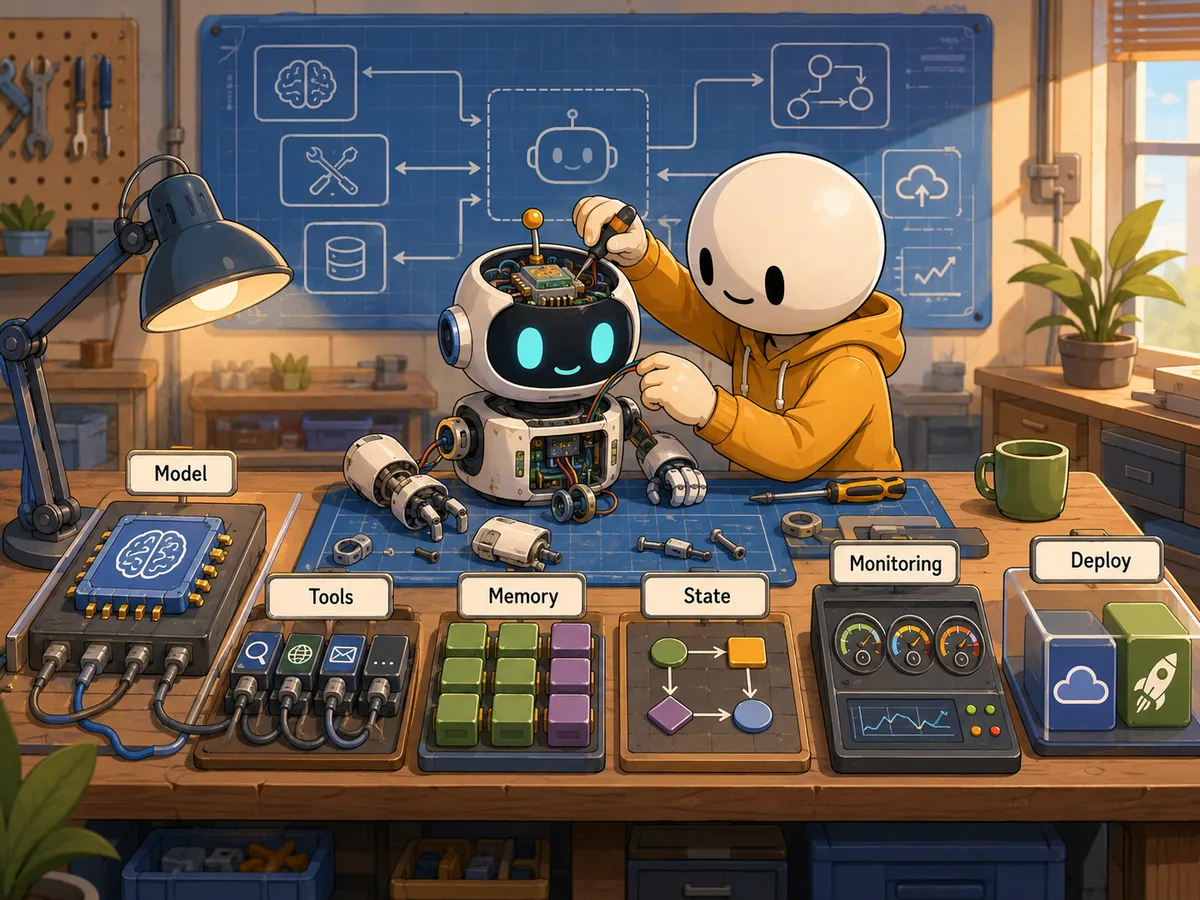
When this is the right path:
- Your requirements are specific enough that no existing agent or service maps to them cleanly
- The agent needs deep integration with internal systems that can't be exposed to external infrastructure
- The way you build the agent is itself the competitive advantage: proprietary orchestration logic, domain-specific memory structures, custom tool design
- You need to understand every layer because you're responsible for debugging it in production
What it demands:
Time and discipline. The gap between a working demo and a production agent is real and large. A demo proves the model can do the task. A production agent handles failure gracefully, recovers from interrupted sessions, behaves predictably across thousands of runs, and doesn't surprise you at 2am.
This path also demands architectural judgment that the frameworks don't supply. Which layer owns state? How does context flow between agents in a multi-agent system? What does the agent do when a tool call fails three times in a row? These questions have answers that depend on your system, not on the framework's defaults.
There's a third cost that doesn't show up in tutorials: the standards are moving. MCP, agent skills, sandboxed execution — new primitives are landing every quarter, and whatever you build today needs to be able to absorb what ships next. On Path 1, that adaptation burden is yours. The teams doing this well aren't just building agents; they're building agents that are designed to evolve. That's a different, harder problem.
Where to go deeper:
AI Agent Roadmap: Everything You Need to Build Agents (In the Right Order) covers this path in full, from picking your stack through production deployment, with links to the depth articles for each phase.
If you want a starting point that's already wired together but simple enough to understand every layer, the Agentailor fullstack starter gives you a LangGraph + Next.js scaffold you can extend without fighting boilerplate — and the architecture is deliberately decoupled, so swapping LangGraph for another orchestration layer is straightforward if your requirements call for it.
Path 2: Build It With a Coding Agent
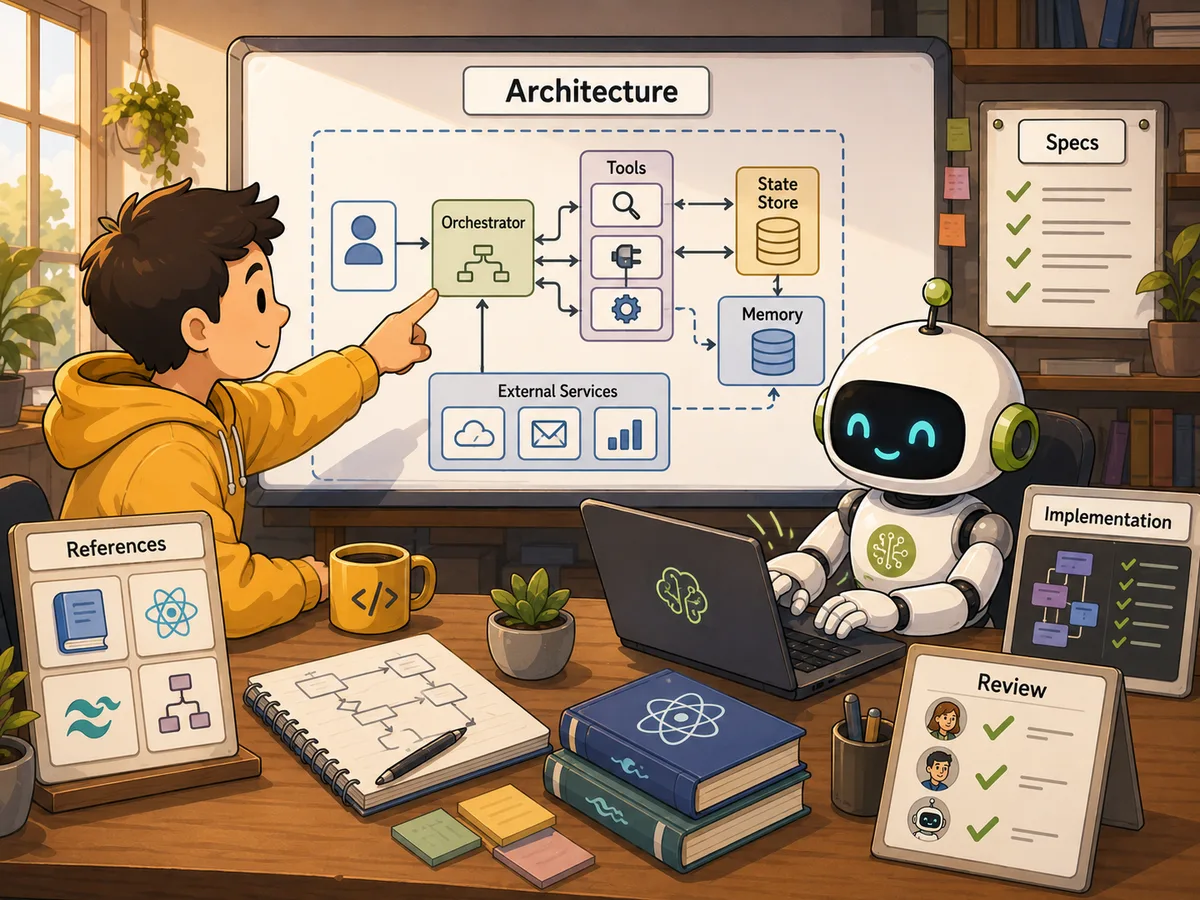
Vibe coding means: describe what you want, accept what comes out, ship it. For most software, that's increasingly viable. The models are good enough, the training data is dense enough, and the blast radius of a suboptimal decision is manageable.
Building agent systems with a coding agent is a different situation. The domain is too new, the training data is too sparse, and the reference repos that exist were themselves largely vibe-coded. When you ask Claude Code or Cursor to scaffold a multi-agent orchestration loop, it's drawing on a shallow well. It will produce something that runs. Whether you'd want to run it in production is a separate question.
Agentic engineering is the discipline that fills that gap. You make the architectural decisions before the agent touches the keyboard: which transport layer, which abstraction boundaries, where state lives, what the agent is not allowed to do. You point the coding agent to the right reference material rather than letting it reach for whatever it finds. You review not just whether the code works but whether the decisions embedded in it are the ones you'd have made.
The coding agent handles implementation. You handle architecture. The split matters.
When this is the right path:
- You know what you want to build and have strong opinions about how it should work
- You want velocity without sacrificing quality or scalability
- Your backend instincts are strong enough to review what the agent produces critically, not just whether the outputs look plausible
What it demands:
Strong opinions upfront. The architectural decisions have to be made before the session starts, not discovered during it. This also requires knowing enough about the domain to recognize when the agent made a choice you wouldn't have, even if the code compiles and the tests pass.
Where to go deeper:
Agent Briefings Issue 16 goes deep on the four practices that separate agentic engineering from vibe coding: decision authority, resource quality, orchestration as system design, and context engineering as architecture. Issue 17 will cover the next step: formalizing these practices into specifications so you don't have to enforce them manually every session.
On the resource-quality practice specifically, agent skills are the mechanism: instead of hoping the coding agent reaches for a good pattern, you install the pattern and it loads when the task matches. agentailor/skills is where I keep the ones behind this blog, currently tool-design and agent-prompt-engineering, each distilled from a technique I've shipped rather than generated from docs.
Path 3: Deploy an Existing Open-Source Agent
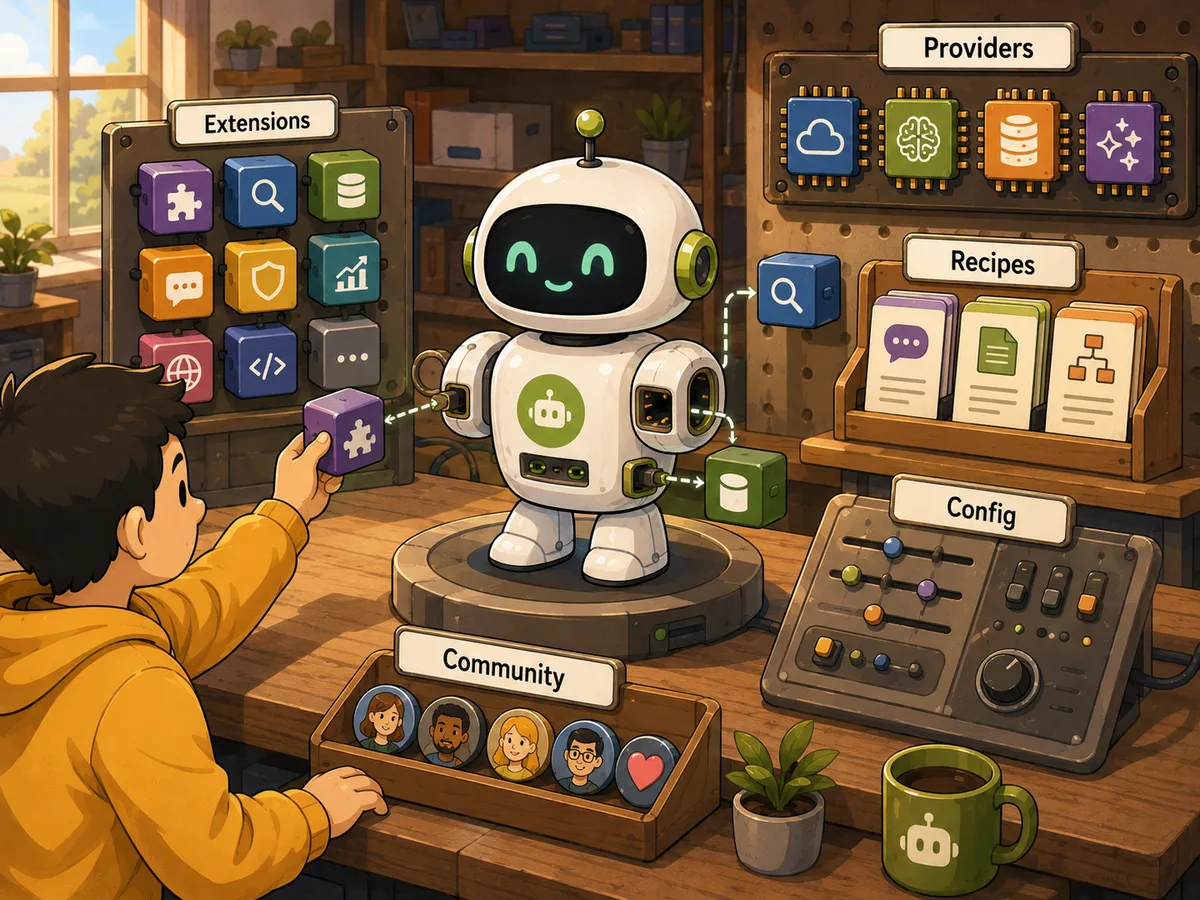
The OSS agent space has matured to the point where real options exist across multiple categories: task-execution agents, gateway agents, self-improving server agents. The capability that would have taken weeks to build in 2024 often exists today as a configurable extension. The question is no longer "does something exist?" but "which one is worth deploying, and why?"
When this is the right path:
- Your use case maps well to what an existing agent already does
- You want full infrastructure control without the cost of building the agent yourself
- 80% or more of the functionality you need already exists and the remaining gap can be closed through configuration or extension
What it demands:
Choosing carefully. "Open source" covers everything from a weekend project with 400 stars to foundation-governed infrastructure with hundreds of contributors. The star count is a weak signal; the governance model and production track record are the signals that matter. An agent abandoned by its maintainer is worse than no agent, because you've now inherited the maintenance burden.
The other judgment call is fit. OSS agents have opinions baked in: extension models, memory architectures, sandboxing approaches, provider assumptions. You need to know whether those opinions align with your use case before you build on top of them, not after.
Three examples worth knowing:
Goose — local-first task-execution agent, built by Block and governed by the Agentic AI Foundation under the Linux Foundation. MCP-based, provider-agnostic, 44k+ stars. The reference point when governance and long-term stability matter.
Hermes — a self-improving server agent by Nous Research that runs persistently on your own infrastructure, learns from completed tasks, and auto-generates reusable skills over time. 173k+ stars, MIT licensed. Built for longer-running autonomous workloads rather than interactive sessions.
OpenClaw — a multi-channel gateway that routes conversations across WhatsApp, Telegram, Discord, Slack, and more through a single runtime. 374k+ stars, community-maintained. A different category from the two above: if your use case is multi-platform orchestration rather than task execution, it's the one to evaluate.
These three aren't competing for the same slot. Hermes even ships with built-in migration tooling from OpenClaw, which tells you something about how the space is consolidating around clearer categories.
Path 4: Use a Managed Agent Service
This is the path to watch most closely in 2026. The frontier labs are converging on it, and the category is moving faster than any of the others.
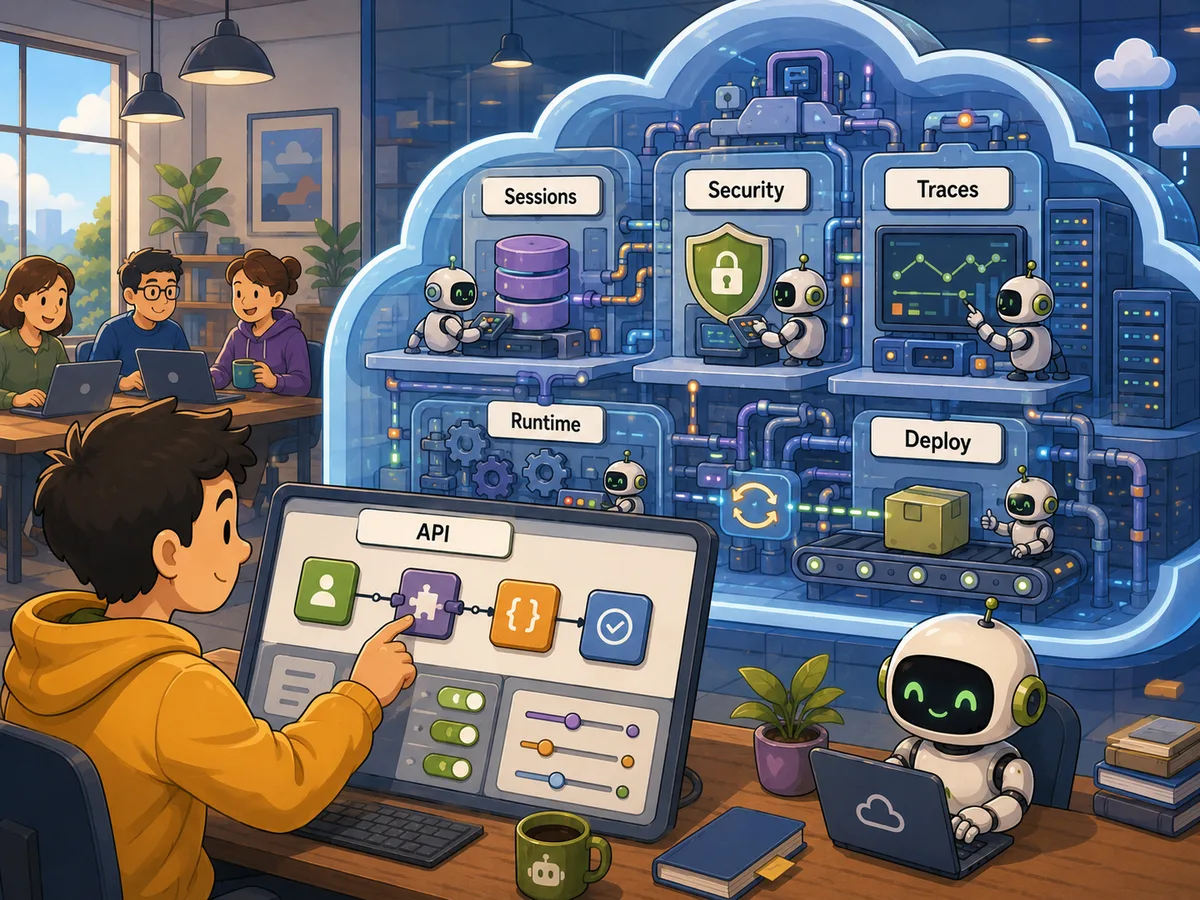
When this is the right path:
Most teams. The session persistence layer is not a competitive advantage. Neither is the execution environment or the retry logic. If you're spending engineering time rebuilding those components, you're not spending it on what makes your agent actually better.
The teams for whom this path fits are the ones who can honestly answer: "Is owning this infrastructure proportional to the value it creates for us?" For most, it isn't.
What it demands:
Careful evaluation before you commit. Managed doesn't mean hands-off on architecture, and it doesn't mean all services are equivalent. Four things matter most when assessing a managed agent service:
- Primitive coverage. Does the service actually wire the capabilities your use case needs? Verify at the tool level, not the marketing page.
- Observability access. Can you see what the agent did, step by step? In production, you need traces, not just final outputs.
- Ejection path. How painful is the dependency if circumstances change? This is the lock-in question asked practically.
- Execution environment. Where does the agent actually run? For agents handling sensitive data or internal systems, the answer to this question may determine viability.
Worth noting: this market is moving fast. Google announced their own managed agent service days after Agent Briefings Issue 15 covered the category. OpenAI will likely follow. The list of providers will look different by the end of 2026 — which is a reason to evaluate carefully now, not to wait.
Where to go deeper:
Agent Briefings Issue 15 covers what distinguishes a managed agent from a standard inference API, the vendor lock-in trade-off reframed, and a practical breakdown of what to look for when evaluating a specific service.
Paths Can Combine
The framework above is a starting point, not a box.
A developer doing agentic engineering (path 2) might be building on top of a managed service (path 4), making architectural decisions while outsourcing the operational layer. A team that started with Goose (path 3) might eventually fork and customize it to the point where they're effectively on path 1. Someone who started on a managed service might eject to self-hosted infrastructure once their requirements outgrow the service's constraints.
The paths describe different approaches to where ownership sits: who builds the agent, who runs it, and who makes the architectural decisions. Most real agent projects mix these to some degree.
The decision that matters most is the first one: which path do you start on, and why? Getting that right determines whether you're building toward what you actually need or accumulating technical debt in the wrong direction.
Pick based on what fits your requirements today, not what sounds most sophisticated. The right answer changes as the problem matures.
Not Sure Which Path Is Yours?
This article gives you the framework. If you'd rather answer three questions and get a recommendation, Agentailor has an interactive fitting that scores your answers across all four paths and names both the best fit and the runner-up — useful precisely because most real projects mix them.
Each path has a full breakdown there: what it demands, what to learn first, and where to start.
- Build it yourself — you own the full stack
- Build it with a coding agent — you own the architecture, the agent writes the code
- Deploy an open-source agent — clone, configure, run
- Use a managed service — the vendor runs the harness
What to Read Next
- AI Agent Roadmap: Everything You Need to Build Agents (In the Right Order)
- You Don't Need to Build Your AI Agent — Just Use Goose
- Lessons from OpenClaw's Architecture for Agent Builders
References
- Agentic Engineering Patterns — Simon Willison
- Claude Managed Agents Overview — Anthropic
- Introducing Managed Deep Agents — LangChain
- Hermes Agent — Nous Research
- Goose — Agentic AI Foundation
AGENT BRIEFINGS
Stay measured as the field moves.
What actually matters for building and scaling AI agents in production — and what's just hype. Straight from the work, no filler.
$ subscribe agent-briefings
→ what works in production, what doesn't.
→ frameworks, MCP, evals, managed services.
→ signal over hype.